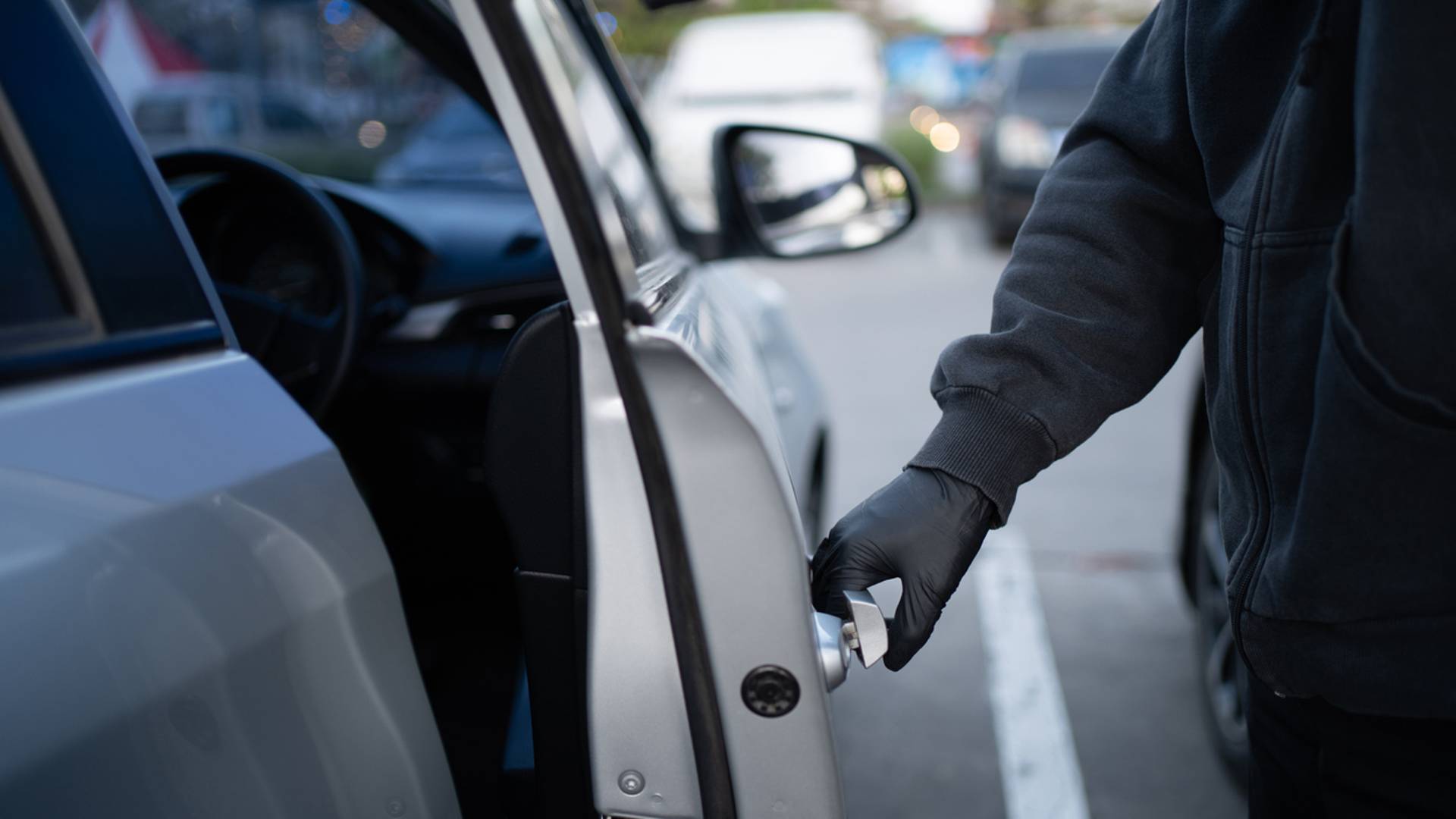
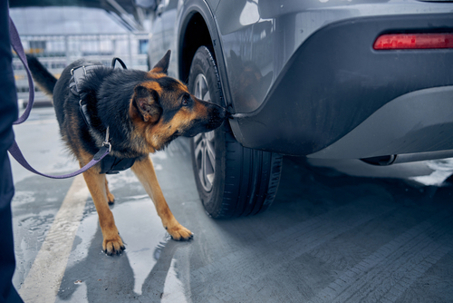
If you’ve ever been pulled over and seen a K-9 unit approach your vehicle, you probably wondered: Is this legal? In California, the use of drug-sniffing dogs during traffic stops is allowed—but only under specific legal limits. Understanding those limits can make the difference between a lawful search and a violation of your constitutional rights.
The Basic Rule: Dogs Are Not Always a “Search”
Under federal law, the U.S. Supreme Court has held that a drug-sniffing dog walking around the outside of a vehicle is not considered a “search” under the Fourth Amendment. Why? Because the dog is only detecting the presence of illegal contraband—something you don’t have a legal right to possess. That means, in many cases, officers do not need a warrant or even probable cause just to have a dog sniff the exterior of your car.
The Key Limitation: Police Cannot Prolong the Stop
The most important protection for drivers comes from the U.S. Supreme Court decision in Rodriguez v. United States. In that case, the Court ruled that police cannot extend a traffic stop beyond the time needed to handle the reason for the stop (like writing a ticket) just to wait for a K-9 unit ,unless they have independent reasonable suspicion of additional criminal activity.
What Does This Mean In Real Life?
- If an officer pulls you over for speeding, they can run your license, check registration, and issue a citation.
- During that time, if a K-9 unit is already present, they can perform a sniff.
- But once the purpose of the stop is completed, the officer cannot delay you further just to bring in a dog—unless they have reasonable suspicion of criminal activity.
Reasonable Suspicion Changes Everything
If an officer develops reasonable suspicion—for example, signs of drug activity, inconsistent statements, or visible contraband—then they may legally extend the stop to conduct a K-9 sniff.This is where many cases are won or lost. Police often justify delays by claiming:
- Nervous behavior
- Smell of marijuana or drugs
- Conflicting travel stories
As a defense attorney, this is exactly where you challenge the stop. Was the delay justified, or was it just a fishing expedition?
What Happens If the Dog Alerts?
If a trained drug-sniffing dog alerts to your vehicle, that alert can give officers probable cause to search your car without a warrant. However, the reliability of the dog can be challenged in court. Issues include:
- The dog’s training and certification
- False alerts
- The handler’s influence on the dog
These factors can be critical in filing a Motion to Suppress evidence under Penal Code Section dies1538.5. Drug-sniffing dogs are not foolproof. Research suggests their accuracy can range from about 40% to 60%, meaning there is a meaningful likelihood that a dog may alert even when no drugs are present.
California-Specific Considerations
California law generally follows federal constitutional standards on K-9 searches, but there are practical realities worth noting:
- Marijuana legalization has complicated dog sniffs, since possession of small amounts is legal under state law.
- Some K-9 units are still trained to detect marijuana, which can raise questions about whether an alert alone justifies a search.
- Courts may scrutinize whether the alert truly indicates illegal activity.
What Should You Do During a Traffic Stop?
If you’re stopped and a K-9 unit is involved:
- Stay calm and polite.
- Do not consent to a search.
- Do not volunteer information.
- Do not argue roadside.
You are not required to answer investigative questions beyond providing your license, registration, and proof of insurance.If you give officers permission to search your car, they can proceed regardless of how long the stop lasts. You are not required to give consent.
Why This Matters for Your Case
K-9 searches are one of the most litigated areas in criminal defense because they sit right at the edge of constitutional protections. Many cases turn on timing—whether the officer unlawfully extended the stop.If the stop was prolonged without proper justification, any evidence found may be suppressed. That can mean reduced charges—or even a full dismissal.
Speak With a Los Angeles Criminal Defense Attorney
If you were stopped and a drug-sniffing dog was used on your vehicle, don’t assume the search was lawful. The legality often comes down to seconds—whether officers extended the stop even slightly without proper justification. An experienced criminal defense attorney can review body cam footage, dispatch logs, and the timeline of events to determine whether your rights were violated.
If you are facing charges or believe law enforcement overstepped, contact the experienced Los Angeles criminal defense attorneys at Stephen G Rodriguez & Partners for a free in-person consultation at 213-481-6811. Protect your rights, your record, and your future.