
Your cell phone may be telling the police more about you than you realize. In some criminal investigations, law enforcement can use digital location information to determine which mobile devices were near the scene of a crime—even when police do not yet know who they are looking for.
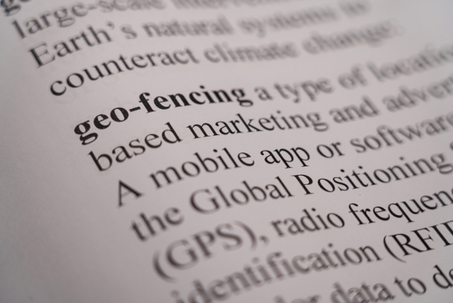
This investigative technique is commonly known as geofencing, and it raises serious questions about privacy, probable cause, and the Fourth Amendment.
What Is a Geofence Warrant?
Geofences are digital tools that create a virtual boundary around a defined geographic area. Businesses commonly use geofencing for commercial purposes, including location-based marketing and targeted advertising. Law enforcement has also adopted geofencing as an investigative technique, particularly in cases where officers know where and approximately when a crime occurred but do not yet know the identity of the suspect.
A geofence warrant generally requires a technology company to provide location-related data showing which mobile devices were present within a particular geographic area during a specified period of time. Investigators can then examine that information in an effort to determine who owned or used a device found within the designated area. Unlike a traditional search warrant, which usually begins with a known person or place connected to suspected criminal activity, a geofence warrant often begins with a location and works backward toward identifying possible suspects. For that reason, geofence warrants are sometimes described as “reverse” search warrants.
Police agencies have used geofence warrants in investigations involving offenses ranging from serious crimes such as homicide to property crimes involving stolen vehicles or vandalized cars. The size of the geographic area covered by these warrants can vary considerably. Some warrants have targeted areas only a few dozen feet or several hundred meters across, while others have encompassed areas larger than an acre.
The amount of time covered by a geofence warrant can also differ substantially from case to case. Some warrants seek device-location information for only a short period surrounding the alleged crime, such as several minutes or a few hours. Other warrants have sought location data covering several days or even longer periods. As a result, both the geographic size of the search and the length of time involved can significantly affect how much information law enforcement obtains and how many individuals who have no connection to the crime may be swept into the investigation.
How Geofencing Can Turn You Into a Suspect
Imagine a murder occurs inside a Los Angeles office building between 8:00 p.m. and 10:00 p.m. Police have no eyewitness identification and no clear suspect, so investigators obtain location information concerning phones detected in and around the building during that period.
Police begin narrowing the results. One device appears close to the building around the time of the crime. Investigators identify the person associated with that phone and discover that he has a prior criminal record. Suddenly, that individual may become a focus of the investigation.
But being near a crime scene is not the same thing as committing a crime. The person may work nearby, live in the neighborhood, have visited a restaurant, or simply driven through the area. Someone else may even have been carrying the phone.
Geofence evidence may create an investigative lead, but it does not necessarily prove guilt.
Why Geofence Evidence Can Be Dangerous
Digital evidence can appear extremely scientific and precise, making it persuasive to police, prosecutors, judges, and jurors. But location evidence has limitations.
GPS, Wi-Fi, cellular signals, and other location technologies do not always establish an exact location. A phone appearing near a crime scene does not necessarily prove its owner was physically at that precise location. Likewise, even accurate information about a phone does not automatically establish who possessed it at a particular time.
The data also lacks context. It may indicate where a device traveled, but it usually cannot explain why someone was there or what that person was doing.
A geofence may also capture residents, employees, customers, delivery drivers, pedestrians, rideshare drivers, and other completely innocent people. A criminal case should never be based on the assumption that location equals guilt.
Geofence Warrants and the Fourth Amendment
Geofence warrants have generated significant Fourth Amendment litigation. In June 2026, the United States Supreme Court ruled in Chatrie v. United States that law enforcement conducts a Fourth Amendment search when it obtains a person's cell-phone location information from Google.
However, the Court did not ultimately decide whether the particular geofence warrant involved in that case satisfied all constitutional requirements concerning probable cause and particularity.
This is why the details matter. How large was the geographic area? How long was the time window? How many unrelated people were swept into the search? And what evidence did police have before obtaining the location information?
Our Criminal Defense Attorneys Can Challenge Geofencing Evidence
If geofence information played a role in identifying or arresting you, your attorney should closely examine exactly how police obtained and used that evidence. Important issues may include whether there was sufficient probable cause, whether the geographic area or time period was excessively broad, whether the location information was accurate, and how investigators connected a particular device to you.
The defense should also determine whether police exceeded the warrant's scope, whether the warrant amounted to an unconstitutional digital dragnet, and whether any resulting evidence can be suppressed.
These are not minor technical questions. Successfully challenging the government's digital evidence can significantly weaken the prosecution's case.
Your Phone Was Near the Crime Scene: That Does Not Mean You Committed the Crime
If police identified you through geofence data, Google location information, cell-phone records, or another form of digital tracking, do not assume the evidence is unbeatable—and do not try to explain it away to investigators yourself.
Digital evidence can be incomplete, misleading, improperly obtained, or taken completely out of context. Once investigators decide you fit their theory, even an innocent explanation can be interpreted against you.
Before answering questions, handing over your phone, consenting to a search, or explaining why you were somewhere, speak with an experienced criminal defense attorney.
At Stephen G. Rodriguez & Partners, we scrutinize how digital evidence was obtained, challenge unconstitutional searches, and force prosecutors to prove their case with reliable evidence—not assumptions based on a cell phone's location.
If police are using your phone to build a criminal case against you, don't help them finish the job. Contact Stephen G. Rodriguez & Partners immediately before speaking with law enforcement- 213-481-6811.