Being pulled over by police can be stressful — especially if you have a firearm in your vehicle. Many Los Angeles drivers wonder: “Do I have to tell the officer I have a gun in my car?” The short answer under California law is: it depends on the circumstances and whether you’re legally carrying the firearm. Knowing your rights and legal obligations can help you safely navigate a traffic stop and avoid criminal trouble.
California’s Rule: No Automatic Duty to Tell — But There’s a Catch
In California, you are not generally required to volunteer that you have a gun in your vehicle when stopped by police. The law does not automatically obligate drivers to immediately disclose a firearm’s presence unless:
- You are specifically asked by a law enforcement officer;
- You are in a jurisdiction that imposes a disclosure requirement when carrying a concealed weapon; or
- The circumstances involve special rules, such as federal properties or airports.
Simply having a gun in your car — if you are legally allowed to possess it — is not itself illegal and does not automatically trigger a duty to tell an officer unless one of the conditions above applies.
When You Should Tell the Officer
Even though there’s no blanket rule, voluntary disclosure can sometimes be the safest choice — especially in Los Angeles where tensions can be high and misunderstandings costly. Consider telling the officer if:
1. You are Carrying a Concealed Weapon Legally
If you have a valid California CCW (Concealed Carry Weapon) permit, and the officer asks whether you are carrying a firearm, you should:
- Politely say: “Yes. I have a firearm in the vehicle, and I have a valid CCW permit.”
- Be ready to present the permit if asked.
This transparency can avoid tension and show you are complying with the law.
2. The Officer Asks Directly
If the officer says: “Do you have any weapons in the car?” in California, and you are carrying a firearm, the safest response is to answer honestly. Lying to an officer during a stop can lead to additional charges including obstruction or false statements.
If You Don’t Have a CCW Permit
California law is strict about openly carrying or concealing firearms without a permit. If you have a gun but do not have a valid CCW, it could be illegal depending on the circumstances and how the firearm is stored.
In that case:
- You should still respond truthfully if directly asked by a police officer about weapons.
- You should not brandish or reach for the gun during the stop.
- Keep your hands visible and follow the officer’s instructions.
Refusing to disclose, lying, or surprising the officer with the firearm can escalate the situation and may result in criminal charges, regardless of the legality of the firearm itself.
Best Practices if You Have a Gun in Your Car
Follow these general safety and legal tips during a traffic stop:
Stay Calm and Compliant
Pull over safely, turn off your engine, and place your hands where the officer can see them — typically on the steering wheel.
Be Honest If Asked
If the officer directly asks about weapons, respond calmly, clearly, and truthfully. For example:
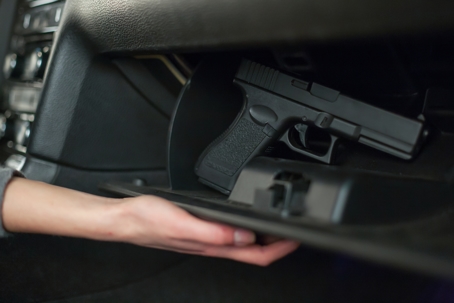
“Officer, I have a firearm in the glove box. I also have a valid CCW permit.”
Avoid Sudden Movements
Do not reach for your weapon without telling the officer first. Even a lawful firearm can be interpreted as a threat if the officer is unaware.
Have Your Documentation Ready
Your CCW permit, registration, and firearm storage documentation (if applicable) should be easily accessible, but only reach for them after telling the officer you intend to do so.
Know California’s Gun Storage Rules
If the firearm is unloaded and in a locked container separate from you (trunk, safe, lockbox) and you are not asked about weapons, some drivers choose not to volunteer the info. But again, if asked, always respond honestly.
Legal Consequences for Failing to Tell an Officer
- Lying to an Officer: Providing false statements during a lawful stop is a crime in California.
- Improper Disclosure: If you suddenly produce or handle a firearm without disclosure, you risk assault or weapon charges.
- Unlawful Carry: If you lack a CCW and are not legally permitted to carry the gun where you were stopped, you could face felony or misdemeanor charges.
Special Situations: Federal Areas and Airports
If your stop occurs in areas under federal jurisdiction — including Los Angeles International Airport (LAX), federal buildings, or military bases — the rules can be different. Some federal properties prohibit firearms even if you have a CCW.
Always check local and federal rules first — carrying a gun into restricted areas can lead to federal charges.
Talk to a Criminal Defense Lawyer in Los Angeles
Traffic stops involving firearms can quickly become dangerous or complicated. If you were stopped and questioned about a gun in your car, or if you were charged with a weapon offense after a stop, immediate legal help is crucial.
At Stephen G. Rodriguez & Partners, we understand California’s firearm laws and can protect your rights when law enforcement is involved. Whether it’s defending against weapon charges or guiding you through a CCW appeal, we’re here to protect your future.
Call (213) 481‑6811 for a free consultation — don’t navigate this alone.
Know your rights. Stay safe. Protect your freedom.