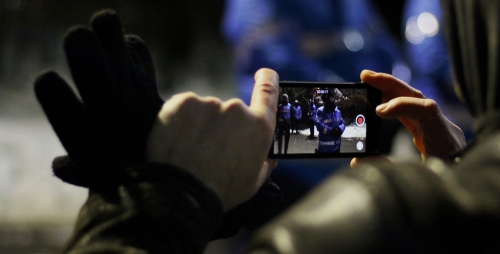
In today’s smartphone era, recording police encounters has become a powerful form of accountability. Whether it’s during a traffic stop on the 101, an arrest in Downtown LA, or a protest in Echo Park, Californians often reach for their phones to document what’s happening. But can you legally videotape the police in California?
The short answer is: yes — but with important limitations. This blog article breaks down your rights under California law — what you should avoid, and what to do if you’re arrested while filming law enforcement in Los Angeles.
Yes — You Can Record Police in Most Situations
Under the First Amendment, citizens have a constitutional right to record public officials — including law enforcement — while they perform their duties in public spaces. This includes:
- Traffic stops
- Arrests in public
- Police questioning in public
- Interactions with civilians on streets, sidewalks, or parks.
California law also supports public recording of police under these conditions, recognizing its importance in preserving evidence, protecting civil rights, and promoting transparency.
California Is a Two-Party Consent State — But There’s an Exception
California’s wiretapping law (Penal Code Section 632) usually requires both parties to consent to being recorded. But when police are acting in public and there’s no expectation of privacy, the law does not apply.
So if you're on a public street and a police officer is questioning someone — or even you — you may lawfully record audio and video, so long as you're not interfering. A traffic stop on a public road is not a confidential communication.
When Recording Police Can Get You in Legal Trouble
Your right to record is not absolute. You can face legal consequences if how you record crosses certain boundaries. For example, you may be arrested or cited if you:
- Physically interfere with an arrest or investigation
- Cross police lines or enter restricted areas
- Ignore lawful orders to step back or move
- Distract officers during a dangerous situation
- Use recording to provoke or obstruct law enforcement
In these cases, you could be charged with obstruction, resisting arrest, or even failure to comply, even if the act of filming itself was legal. Always maintain a safe distance and avoid physical or verbal escalation.
What Police Cannot Do (But Sometimes Try)
While some officers may be uncomfortable being recorded, they cannot lawfully:
- Order you to stop recording simply because they don’t want to be filmed
- Seize or search your phone without a warrant or your consent
- Delete your recordings under any circumstance
- Retaliate against you for exercising your rights.
If an officer attempts to delete your footage or takes your phone without a warrant, that may amount to a constitutional violation under the Fourth and Fourteenth Amendments.
Why Recording Police Is So Powerful
There are several legitimate benefits to recording police activity:
- Preserves objective evidence
- Counters false accusations
- Clarifies disputed facts in court
- Discourages misconduct or abuse
- Supports civil rights lawsuits
- Strengthens your criminal defense
Countless cases have turned on smartphone footage that told a different story than the police report.
Potential Risks to Be Aware Of
Even if your recording is lawful, you should be mindful of the following:
- It could escalate tension in an already volatile situation
- Officers may accuse you of interference
- You may be temporarily detained or handcuffed
- Your phone could be seized unlawfully, forcing you to fight to retrieve it
How To Record The Police Safely
If you choose to record a police encounter, follow these best practices:
- Stay calm and respectful
- Remain at a safe, non-interfering distance
- Clearly state: “I’m not interfering — I’m just recording.”
- Hold your phone visibly (not secretly)
- Narrate the date, time, and location
- Back up the video to the cloud as soon as possible
- Never physically block officers or refuse a lawful order
What to Do If You’re Arrested While Recording
If you're arrested or cited while filming:
- Do not argue at the scene
- Invoke your right to remain silent
- Politely request an attorney
- Document everything afterward — names, badge numbers, and witnesses
- Call an experienced criminal defense lawyer as soon as possible
Arrested While Recording Police? Call Now.
If you were detained, arrested, or had your phone seized or recordings deleted, it’s important to speak with an attorney. Many such arrests can be challenged in court, and may lead to dismissed charges or civil rights claims.
At Stephen G. Rodriguez & Partners, we’ve helped clients in Los Angeles and throughout California protect their rights after police encounters. Call us at (213) 481-6811 for a free consultation. We’ll explain your rights and fight for the justice you deserve.
Know your rights. Protect your freedom. Record responsibly.